One Thing Led to Another: Readings on Opium War

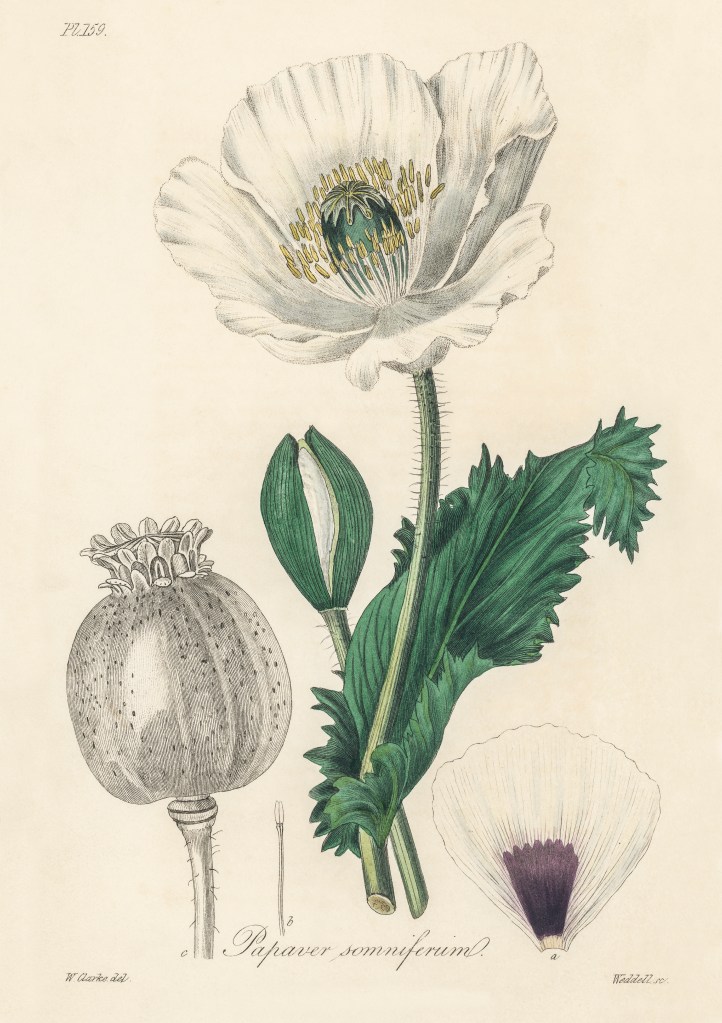
I have not much idea about Chinese History and had to google timelines while reading the earlier article on tax revenues in Qing dynasty. One thing I was surprised to find out was in 1729, Yong Zheng had already banned opium selling and its use. There was a stricter ban in 1799 again. Opium had become a problem but government officials didn’t want a strict enforcement because that will reduce the amount of tax that can be collected. Opium was a very profitable business. First, it was an easy crop and is grown around Yunnan area.  The original use was medicinal and the smoking of opium was mixed with tobacco and then just opium. The use was mainly by the wealthy but when the lower grade opiums became accessible to middle and lower income classes. In Peter Goullart’s Forgotten Kingdom, he said that most around Yunnan smoked opium. It was a part of leisure activity. Later, when the communist’s Red Army came along, even when opium was strictly banned, there were late night executive meetings that came with food, drinks and smoking to accompany the discussions.

There are some historians who viewed that the war was accidental and Opium trade wasn’t a big thing for Britain. It was just some merchants trading.

Harry Gelber wrote: Only in September did London became alarmed, with the arrival of a Canton dispatch of May 29 relating China’s military threats against defenseless British civilians….For British politics the issue ceased to be opium – about which many people sympathized with China – and became the fate of not just opium traders but innocent men, women and children threatened by armed Chinese soldiers.

By then opium trade was banned. So these women and children who were smuggling opium being considered innocent and threatened is a spin by ministers? So a key reason why sending military force was necessary was because the merchants were promised compensation of the value of the opium seized. Britain did not have the 2 million pounds. Military action was suggested, wrote Harry Gelber.

Not everyone agreed. It was after all a drug that they were selling.

The fiercest thrusts came from young William Gladstone, destined to become Prime Minister decades later. “A war more unjust in its origins,” he declared “a war more calculated in its progress to cover this country with permanent disgrace, I do not know and have not read of.” Palmerston’s response was masterful. It was obviously entirely China’s business to decide what should be imported into China, and to supervise and control China’s coasts. But as it was, the actions of the Chinese Commissioner had been “unjust and no better than robbery.” Indeed, a joint British, American and French naval force should in future be stationed on the China coast to look after Western interests. Though a British military force was now being sent, a demonstration would probably be enough to have British grievances met without further action.

Now if we think of this as a spin where the actual money was the real root of the problem, is opening more ports a real reason? If the Chinese did not want anything else from Britain – there was already trade in Canton and China was selling Tea, Porcelain and Silk – how would opening up more ports, expand the products that Britain could sell to China when China had nothing Britain had other than Opium? Who really is the merchant(s) who has these seized and egging Britain to go to war? Hans Derks said it was William Jardin. (Chapter 2, pp 13).

Hans Deck was harsh, pointing the blame squarely on Britain as the aggressor. The funny thing is few actual Chinese didn’t think Britain was an aggressor. Few articles I’ve read mostly believed Britain had reasons to go to war. However, I can understand that with the Queen as the Head of the Anglican church it would be very strange for Britain to openly protect the opium trade. Surely some other reason need to be used and not an addictive drug. Hans Derks pointed out that Dutch started the profitable trade of opium into the Asian trade route. British copied the Dutch’s methods and became richer. Britain was indifferent to the morals of selling opium. While the Christians disagreed with this trade and sent letters back to England, they eventually for many reasons supported its legalisation, wrote Huang Yi.

Now is it true that Britain was reliant on the Opium trade for tax revenue? A more measure statement would be that it trades in opium as well as other goods. But a clue is in the earlier article that I’m reading: “Money, Power, and the State: The Originals of the Military Fiscal State in Modern China”  written by Stephen R. Haley in Journal of the Economic and Social History of the Orient 56 (2013) pp 392-432

So the key premise in that research is that because of incredible need for money by the government, the officials had to devise new ways to increase taxes. This new ways were devised by the smaller officials and then eventually agreed by use of the court. Qing government needed money because of military and defense needs. There were not just uprisings but also the need to defend the realm from foreigners, paying the unequal treaties. When Taiping Rebellion occurred, the foreign forces (including Britain) thought that if the Taiping rebels won, then they won’t have free access to Chinese ports and the Opium trade will also be gone. With this in mind, the foreigners provided weapons to help Qing to eventually suppress the rebels.


I had finished Forgotten Kingdom and feeling a bit of withdrawal so I went to library hoping for similar travel books. With all these opium stories in my mind, just walking by the aisle, Gabrielle Paluch’s The Opium Queen leaped at me. I was totally shocked by the contents.

Since my first day of skepticism in the publisher’s office at the Myanmar Times, I had learned one of the first eyebrow-raising failures of covert US foreign policy executed by the newly formed CIA during the Cold War involved arming and financing anti-communist Chinese troops in exchange for opium, firmly lodging them in Burmese borderlands as a military threat for decades.

The book had lots of interviews with the people around the lady Olive Yang. I was shocked by the interviews, esp this with Francis Yang, a younger brother of Olive Yang.

“Did Olive ever talk about trading opium with the CIA…”

“You know people love to talk, even I want to know how Olive always got away with everything,” Francis said, explaining that Olive always seemed to find a way around the rules. “We just thought those weapons came from General Chennault’s men. We didn’t realize they were CIA until afterwards.”

“After what?” I asked.

“After we were expelled,” Francis said. “You know all this CIA, DEA, I used to think they were the good guys-they were just as corrupt as the rest of them. They were all working together. As soon as Jimmy needed then, they didn’t want to know him.”

You just have to read the book to know the cast of characters. I could not believe what I read. I had to poke around more. INTELLIGENCE AUTHORIZATION ACT FOR FISCAL YEAR 1999 (House of Representatives – May 07, 1998) A Tangled Web: A History of CIA Complicity in Drug International Trafficking had a long history all written out. America through CIA in its attempts to limit the spread of communism, supported the drug trade across the world. Japan’s yakuza became a major source of methamphetamine in Hawaii. In Taiwan, the CIA provides arms, ammunition and other supplies to the KMT. KMT settles in TW and expands opium production. By 1972, the KMT controls 80 percent of the Golden Triangle’s opium trade. During Vietnam War, CIA renews old and cultivates new relations with Laotian, Burmese and Thai drug merchants, as well as corrupt military and political leaders in Southeast Asia. Heroin production increases dramatically. And so on. (Heroin is also made using opium as a source.)  Looking around for more validation, I found the wiki for the book The Politics of Heroin written by Alfred W. McCoy with Cathleen B. Read and Leonard P. Adams confirming CIA’s involvement even if CIA did not traffick drugs. It reminded me of how the British spin this uncomfortable fact that they were selling drugs to China ie, this was morally wrong to protection of British interests.

The story is now changed. But when the narcotics flowed into Vietnam during the war and Americans soldiers became addicted, suddenly America decided to declare a War On Drugs while CIA continued to support the drug trade through protection of key drug lords. Now America leads Anti Bribery and Corruption, Anti Terrorists and Anti Money Laundering and Trafficking. How much of this is to spin another story for it’s own citizens to disguise some facts not widely discussed?  

Modern China : Late Qing Dynasty’s Fiscal State

Interesting titbits

  • Before mid 19th century, govt revenue was slow after Kangxi froze tax. Tax was on agriculture product. Jiangnan, Jiangsu and Zhejiang accounted for 75% of the tax revenue (grain). 
  • The grains are distributed through rivers to the granaries in the capital, then to the military garrison and finally to court. Redistributions happened from the wealthier provinces to even out the poorer provinces.
  • Massive growth in taxes occured as a result of the Taiping Rebellion. Qing govt moved from taxing agriculture to commercial levies like customs and transits from the transporting of goods. (It started because the key revenue producing provinces experienced losses being close to the front lines.)
  • Unequal treaties increased customs receipts when greater volume of trades eg cotton and opium increased provided money for greater defense spending. Shanghai provided 1/3 of tax receipts.  
  • Revenue from customs shot up  rapidly after Shimonoseki and Boxer indemnities – is China had to find money to pay for them.
  • Money has to be found to support the suppression of Muslim rebellions in Gansu, Xinjiang, Qinghai and Yunnan. Revenues now supported mostly defense spending instead of aiding poorer provinces. Greater defeats in military translated to even lesser aid to poorer provinces.
  • Most interesting:  Decline of Qing dynasty is as a narrative is doubtful since there is a lot of creativity amongst provincial officials to change the Fiscal policy to generate tax funds. 

I’m reading : “Money, Power, and the State: The Originals of the Military Fiscal State in Modern China”  written by Stephen R. Haley in Journal of the Economic and Social History of the Orient 56 (2013) pp 392-432

Consumption conundrums unravelled

Sara Horrell, Jane Humphries and Ken Sneath

Economic History Review 68, 3 (2015) pp830-857

The traditional economic principle is that price and real income affect consumption trend in that the cheaper the production of the good, the greater the falling price, the greater democracy of the good. This was probably the 3rd lesson I learnt in economic history class. (I still remember now one example from my reading that in the far away future, N=1 jeans is going to be extremely cheap. Yes? Maybe? Those elastic stuff Uniqlo sells – does it count?) The authors used an incredibly unique data set to show how consumption involved over time.

The records were stolen property list from robberies and housebreaking between 1750 and 1821 from Old Bailey London.

(Sorry for the annoying colour.) But OMG how cool is that! I am just totally wowed by creative datasets. The authors took pains to show that ordinary people (casual workers) were also robbed by professional robbers, not only the rich. These robbers strip the house completely with no concern about hard to carry items. Like what we see in the shows, robbers have accomplices with carts and wheelbarrows for such big jobs. Robbers focused on items that they could turn into money. In the olden days, there were many things sold in the second hand market and the rich also bought second hand. (It seems to me, shopkeepers were not in the habit of asking where the goods came from.) Most cool was that the data contained the occupations or status of the original owners – eg, Lord, Esquire, Captains, professionals, food sellers, non food sellers, innkeepers. The dataset also contained the value of the goods. With that I can imagine you can build a profile of the spending of the Lord vs, Jeweller or Wine seller or the casual worker.

I was surprised by the things stolen. Cloth was often stolen from high status folk in 1750s but by 1820s they were stolen from more ordinary status folk. Clothing, linen, china, featherbeds, cotton bedcovers, napkins, tablecloths were goods that can be sold easily according to the writers. It was surprising that cotton bedcovers was expensive then and an aspirational purchase even though England has the tech to make cotton bedcovers. Linen is considered less aspirational. Silk was definitely owned more by the higher status folk. Comfort (ie quality improvements) was aspirational such as higher quality silk stockings, higher quality featherbeds, cotton bedcovers (vs linen).

The normal stuff such as notes, coins, watches and silverware was also discussed. One interesting discussion is watches made of silver vs silverware. Watches made of silver become so commonplace by 1750 that normal folk were robbed of their timepieces. Gold watches were for the higher status occupations. Yet quality silverware remain a good for the elite. The suggestion was that watches can bought during sudden prosperity and can be pawned in hard times but silverware which were for mainly for display required the owner to have much more disposable income.

The paper concluded that ownership is a mix of not only the falling prices due to production cost but that fashion of the day was an interplay between aspiration and differentiation. Fascinating paper!

Reading this I started to understand the desire for condo ownership. Property prices have been increasing very fast yet there are young people around me who are keen to live in a condo vs a HDB. HDB should be a much more logical spend – seriously great amenities, more square footage for the buck and so much convenience. Cost of maintenance is way more reasonable because it is shared with many households. But if one considers the condo spend as this not a comfort spend but a motivation to be different, it makes sense. Paying to be different is important to the condo dweller and they are more willing to apportion a greater amount of budget to their family spend. This article also explained why luxury spend such as watches, designer leather goods and jewellery ownership is so prevalent in Singapore but not designer clothing. It’s akin to be being robbed of a silver watch by 1820 is seen for normal status folk because a silver watch is affordable during periods of sudden prosperity and can be pawned off if needed. Luxury goods are seen as a good store of value even though they are just consumables (eg Rolexes) and the value drops significantly. Designer clothing is much less easily changed to money.

An aspirational spend (to increase comfort) that I can think of is robot cleaners, robot cooks. I started with a very early iRobot which was the rough equivalent of a Samsung phone galaxy model. I replaced it with the Roborock S7 4 years ago at around $700 for a new release price. The latest prices have increased to more than double at $1800. I suspect this is a comfort spend that most are willing to spend on for an upgrade. The new model promises better clean yet none of the robots beat a human cleaning the floor daily (vacuum and simple cold water mop). A robot just does not give a clean floor feel like a human cleaning the floor. (WHY?) The closest is if the robot vacuums twice, then mops twice. (Come to think of it, maybe this is why my robot is spoiling so often.) It works slower than a human. Yet we buy it despite the price – so that we don’t have to do it.

The Making Of a Fiscal State in Song China, 960 – 1279.

William Guanglin Liu

The Economic History Review Vol 68 No. 1 (Feb 2015)

I have never read about Chinese economic history assuming the lack of data. I was surprised & convinced by the arguments put forward in this article. It had a clear step by step explanation of song dynasty move into a fiscal state.

1. Song dynasty moved a significant & large portion of fax revenue from direct taxes on land to indirect taxes (ie excise). Indirect taxes were collected from tea, salt & alcohol trades.

2. The state developed tax professional and processes to deal with tax collection across the land.

3.The state began to use promissory notes.

The thing I have been wondering is, why China, who had rather obvious developements in the past sort of forgot all these advancements. What if technological advancements were not born out of need but of intellectual curiosity? Need may not be a practical need – it could be for the desire to brag as well. If there was no need for the country to brag, to compete, to fight, to show off in general, the desire to innovate won’t be much supported.

So bragging has its benefits for a nation.

Stability in the Banking Industry

This article on “Why Canada did a- have a banking crisis in 2008?” sets out an an intuitive explanation for banking stability.

A small number of large banks providing universal banking services allow for a regulator to impose strict regulatory requirement. Risk taking behaviours in banks results in greater occurrences of banking crisis & panics. Hmmmm, okay. Ho hum.

Competition in the banking sector & the political desire for the financial industry to grow into a regional hub creates increased risk taking behaviour in banks. Regulatory competition causing a fragmented regulatory landscape decreases effectiveness of regulatory bodies to forewarn of crisis. Mind blown.