Rothschild scale of wealth

I am reading the House of Rothshchild since December – picking it up and putting it down. It’s a boring dull record of all the monies they make and the varied deals and negotiations they had.

Two things struck me. One, it appears impossible to have a well run anyway without some conflict in the running of it. While the father and brothers had this super tight agreement not to split up the business – instead they created their own branches and cross held  shares, there is still conflict in the day to day deal making.

Their willingness to take on risk for the deal. Risk like smuggling, running capital flows during wars. They did not hunker down and avoided risk. They aggressively continued business, taking on larger and larger risk until they were, combined, bigger than any other banking houses. They were never shut down because countries at war were begging for the shipment of gold to fund wars and they were the only merchant banking house willing to do so.

This appears to be the same sort of basis why certain illegal busineses such as drugs growing, manufacturing and  trafficking remain hard to kill off.  (I’ve read elsewhere). Generals with huge resources were able to fund and provide armies for wars in their country. As a thanks, they were undisturbed in their businesses.

Rothschild “assisted” many countries. In addition to having  insider news from politicians, they were largely undisturbed in their deals. They had cultivated many political relationships with bribes. 

Look at their growth

1797: 9,900 GBP 

1807 : 50,600 GBP (10 years)

1810: 72,700 GBP (3 years)

1815: 336,000 GBP (5 years)

1818: 1,772,00 GBP (3 years)

By 1825, they hit GBP4.08m and 1844 it was GBP7.78m.

It made me wonder if the Boglehead theory of 2 or 3 fund for the simple minded investor was really a marketing tool. It was easy to sell and it meant Vanguard could set these funds up easily, earning a small mark up for their troubles (the smallest all the proponents will tell you).  Now with this huge fund invested in the market, globally with big amounts, now wouldn’t that make a guy feel a bit swell? He could influence the companies without owning anything at all. He has an army at his bidding and calling ready for world domination. What would the next step be?

Value, Joy, Work, Life. Basically, blah-blah-blah

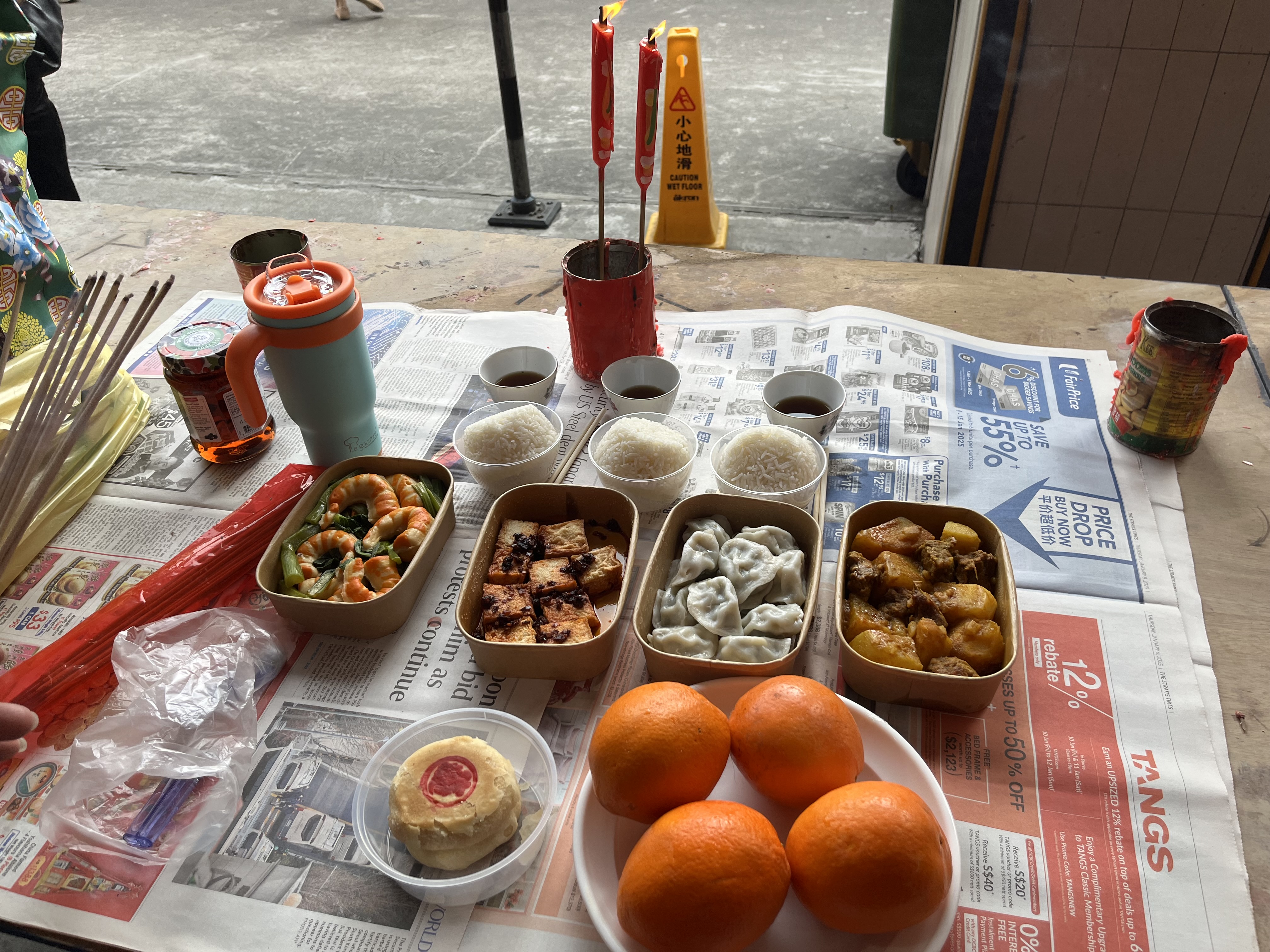
I happened to, while clicking links, read Investment Moats Kyith’s experiences on ancestral praying.

Now here is mine. I cooked this. While it’s not as fabulous as my husband’s nephew K’s vegetarian feast, my mouth did water as I was putting it down. It looked delicious and I decided to snap a picture. My sister in law would purchase praying sessions. I am more DIY, just chanting scriptures that I am familiar. I’m not that familiar. (Again, K is amazing – he knows enough to lead a home prayer session.) I’m just not so organised and in the know what and where to do these things.

Kyith’s musings and my bold and italics:

These sessions is even worse for me because… as a finance blogger for the longest while, it is unlikely you can take the part about measuring intrinsic value, extrinsic value versus what we had to pay. All of these sometimes mesh between

  1. We are going to throw most of these away and these are just paper we burn. Should we spend so much?
  2. But we got to do it in a traditional way. Do we need to buy XXX, buy YYY or are one of these optional (that is not part of the tradition)?
  3. Are we really going to throw these food that is actually eatable away like that?
  4. I wonder if I am doing the minimal and I should do more?

As a finance blogger, he can’t help thinking about value vs the effort. He can’t stay in the moment.

The real value is being in the moment. Saying hello aloud or silently to those who are not in the flesh next to us. Praying aloud or just staying silent. The real value isn’t the amount of visible offerings (all edible if you cook it yourself or buy from a vegetarian shop that you like). He went on further to muse what really is independence. After all, he is a FI/RE blogger. He wondered aloud if we work or desire for FI/RE due to external or internal motivations or fears.

I think the FI/RE movement reinforces fears and insecurities about money. The endless computations and musing trying to figure out whether it is enough, then the endless computations how to take the money out. Thinking of these fears is rather comforting. These fears are legitimate enough reasons to permit inaction. To strike a different path washes away the illusion of safety. But life is unsafe. From precarious pregnancies to growing up as a young adult and eventually as an old person. Life is always trying to kill us. Bankrupt us even for trying. The battle isn’t trying to make the risk as small as possible. (Gasp! But you are a risk manager, Eileen.) Really, it is not. It is just figuring out enough of the path, trying it out, yes, there is enough to go around.

Money wise, I can appreciate why some, like a close family member, choose to be ultra frugal to the point of obsession. It’s part of their joy. (We do love to suffer.) There could be others who take pride in the amount of money that they have accumulated over time. The nice title that they retired with. It is part of their joy and identity.

Which brings me to this news article from CNA of a SAHM, Ratna Damayanti Taha who won the Epigram 2026 Epigram Books Fiction Prize. Those very much into the numbers would be interested to know the prize is $25,000. She worked for 5 months from Feb to June 2025 to earn this money. Some of those who hunker down with a huge portfolio probably have dividends multiple times of this money in a year. Some adults with nice titles earn that much in a month. That is not the point of this prize, I assure you. The point is that she achieved her dream to be published and distributed all over SEA. She has a master’s degree but chose to be a SAHM. Her ambition and interest did not go away. She probably submitted way more often. She revised and re-worked and wrote really fast to be able to submit and win the Golden Point and Epigram Books Prize. That is serious determination and discipline. How did she write that fast? The organisation also took a huge risk – not just on an unknown. How will these books sell with declining readership and everyone’s eyes on a video screen?

I have always been embarrassed and uncomfortable about my writing. I am bad at plotting. I am also bad at just forming beauty. I compare myself with all the literature greats. I am also bad at telling people I write. I have no such hang ups about painting. I started out from stick figures and a D in art at school. Whatever I am doing is a lot of hard work – I have no innate artistic talent. I picked it up mainly because it is something I totally don’t know how to do it. Art is totally unrelaxing for me. It is extreme stress to battle water being too wet or too dry, the colour being too much or not enough. It forces me to be in the moment. Funny that I am unable to stop carrying this ego and unnecessary chatter while writing. I can’t even write a blog post fast. I’m writing and backspacing this thing. It’s a wonder that I can post this.

Thinking about art learning

My earlier post on the musical set me thinking about my art learning experience in a school vs self directed learning.

The key advantage in self directed learning is that you can shop for a teacher who teaches well. Sampling lessons makes a lot of difference in deciding what to consume. This works if you know specifically what you need to work on. It does not work if you lack direction in your journey. It also does not work if you lack discipline to sit down and paint. The other key is to pick up something harder to paint so that there is progress and change.

Being in a school meant for me someone is going lesson plan, to demonstrate, correct and provide me critique. This is the education that I am paying for. I don’t need the teacher to be funny in lesson delivery or empathetic why I didn’t do homework. I want this “pass up art work” weekly so that I am made to practice. This is why self-directed learning is hard. You are not accountable to someone whose job is to make you deliver.

Art is tough business. Making the learning process joyful or making a persons more excited about art isn’t actually pushing the student to be a better artist. If you are lucky, you get a teacher who shares concepts and demonstrates skills. The critique and feedback is most important in a school environment. If you are lucky, you will get great critique that is useable.

Doing art is something you don’t have to socialise. But art cannot exist in a bubble. A teacher forces socialisation, shares what is great or not so great and creates that tension to enable change.

Checkpoint Theatre presents Secondary: The Musical

I think this show is rather a tremendous success the way the director and composer wanted. It succeeded not only because of it’s characters, the storyline, the very believable and realistic problems that each of the characters faced. The musical showed that fear was behind a lot of decision making in the education system – fear of parents, fear of being outside of the education system by kids and parents, fear of the executors in the system.

There was a funny thing though.

I can’t understand why the main character – a literature teacher Zhao Li Lin – believe in this entire educational system so much. I can understand she wants to do a great job by the kids. In any case, by end of the year, the kids scored highest of the entire cohort for Literature. They figured out the system for literature and perhaps even actually love it. She more than did her job. She excelled in that KPI. Cutting a mark, the story says, is terrible. She was fearful because the kids might be retained in Sec 3 because of a single mark. That was key fear for kids, parents and maybe the teachers – this arbitrary mark is a make or a break.

I can see that but I am unconvinced those are high stakes. They were still in the system. They were still given the chance to earn marks if they figured out how to navigate the system. Kids who are the elite 3A class understand the system and what it needs from them. They deliver and excel. 3F kids because of many reasons have no time or energy to understand this system. They struggle. A system can have multiple goals but ultimately it processes a service or a good to achieve some national priorities and not individual ideals or priorities. It’s not even about who has or does not have the money for tuition. Exclusivity is a marketing concept. The less of this service that is available, the more coveted they are. Gifted streams, elite secondary schools, they need this point system to remain in elite banding. If they rely on this cut off point system, is that even the school’s achievement that most of their students win prizes or go on to good JCs? Asshole parents exist because they swallowed the whole exclusivity marketing. They want the Hermes branding for their kids. If Huxley is just an ordinary secondary school, is being in 3A such a difference? Is it even a visible branding? This perceived position changes with each test or exam. Are these really such high enough stakes to create twists in parents collective panties?

This narrow mindedness over one point – this is a piece in the show – and how it builds to the tension in the story becomes less believable. The real stakes are the exit points in educational levels. The kids at at Sec 3 level where the stakes are not so high as O levels because the kids are still in the system. It is still processing them onward to O levels which is the next goalpost. The pass or fail is not severe enough to mine juicy angst. Now, if the borderline child had been processed onwards to O levels when they are not ready, that would prematurely pin the child to certain educational pathways. At Sec 3 and the child is retained, the child needs more help. I’m not saying the scene is poorly executed but I don’t agree with what the main character wants for her kids is actually good or useful.

The underlying reason is a mainly a me problem: I lack intense level of belief and deep trust that an education system provides real learning. At primary and secondary levels, everything is more or less rote learning. We need that foundation to understand harder staff at university levels. The marks are an indication of whether the child figured out what the teachers want and need them to regurgitate to indicate they have learnt. The best teacher in my mind is really explicitly teaching the kids, this is in the exam and this is how I need you to answer to get to the next door. Now this pattern is the same as this other pattern you have learnt elsewhere. Those other marketing stuff – making a difference, creating joy in learning – that’s nice but not the norm.

Piano repair found and lack of productivity this weekend.

So yay there is someone in the big wide world of Singapore who could fix the piano and he promised it would be good as new. I am rather looking forward to the good as new. I never actually experienced it good as new. I had sticky keys from day one and there was no one who could repair. Not even Kawai. The best was a few months ago when someone named AutumnWoods on carousell managed to fix some but not all of the problems. That was a significant improvement.

I was rather unproductive this weekend. I was writing at home with cafe noises and classic FM on the radio. I was distracted by the need to make lunch, wash things in the sink and other chores. I managed about 450 words before kids returned home and I stopped.  I started only after they left in the morning for classes. I felt more productive in a room full of strangers and I completed 500 words a lot quicker.  What I didn’t really like was thinking that I was downing sugar (Hot Chocolate) or caffeine (can’t sleep with caffeine) at close to $8 a cup at a rather warm cafe. Perhaps it was the coffee or chocolate that drove the word count, not the room full of strangers

Funny thing, life.

Daily writing prompt
When you were five, what did you want to be when you grew up?

It occurred to me that what I said I want to be, was merely a thing I did at 5. Being a pianist was one of them. I was indifferent to playing. My piano teacher heard this indifference. She also heard that I had no feelings to express and complained about it. The funny is, she heard me. This inner core that was the same from 11 to 50.

She put me to playing Bach after discovering that I could express Bach better than any other composers. It was a relief really, having to just execute the notes like an efficient typist. Mainly because there were less complaints, not that she stopped complaining.

I did eventually dislike practicing. I was beaten and shouted at over the piano a lot. So it’s a funny thing that 12 years ago or so, I went to buy a piano. I had no intention of wanting my kids to learn then. It was just a toy. I sing kids songs on it when they were small. The only closest use to actual music use was last year, for my daughter’s choir audition.

It stopped working a month ago. It wouldn’t turn on. I was ok until two repairers told me that there might not be parts.

My brain went into overdrive. There is absolutely no reason to replace it. I don’t play it more than 1 day a year. My daughter makes some songs with it but that’s about it. Yet, I want to replace it. The brain could not compute.

The funny thing about life is that at 5, this tiny person with a barely formed brain makes a decision – I want to be a pianist. And then at 50, despite having a logical thinking brain, this adult continues to (maybe) want to be a pianist.

It’s just like painting. An insurmountable mountain that I want to climb. Why? Maybe I just like suffering – who knows. I don’t care that it is a furniture for 364 days. Ok, likely way more. It’s just weird when it’s not there.

Bill Nighy’s Ill-advised

There was an interesting comment he made about book storage in response to a question of someone who was drowning in books.

Bill Nighy said that he doesn’t hang on to books unless there there is a special reason to do so. He said that when he was younger he imagined he would love in a book lined home when he grew up. That was not the case.

I also imagined that I would love to have a home or a living room that is like a library. Now older and having owned a home, I don’t actually think I would enjoy it. I tend to need to go toilet urgently when I smell books. I can not last longer than 15mins in a book store without having to make a run for the loo. And the reason is because I love reading and I always read on the toilet.

The other reason is that I discovered I enjoy not having eye clutter. My home is not constantly clutter free. If possible, I would love to get rid of my belongings so that I don’t have clutter at all. I don’t even like storage that is full of things. I want it to be empty. The idea of have shelves weigh down and groaning with books is romantic but ultimately as a person having to do the chores, it’s an idea best left as a fantasy.

History

Describe an item you were incredibly attached to as a youth. What became of it?

I never thought I would stop loving Grahame Greene, honestly. He was my first real love. I had an earlier “boyfriend” John Irving. Irving was a middle school romance. I was attracted to how funny he was. I was smitten by his jokes and how absurd he makes everything seem. I hung around Irving’s friends like Kurt Vonnegut and Gunter Grass and pretended to laugh at their jokes and filled their beers when they cried. I never really did clicked with the three of them. Vonnegut I could never get – his jokes were not funny. Grass was sooooooo super cool. Always bringing his pets or toys around – a dog, cat, fish, drum. I loved being part of the cool crowd. At the height of my coolness, Grass introduced me to Thomas Mann. I felt so fancy when I met Mann. He was suave, cool, handsome, funny but never overly cerebrel as if one of those Oxbridge people who have the mythical combination of bright, smart, kind and funny. It was disappointing I wasn’t invited back after a few times. I suppose I wasn’t cool enough.

I was totally obsessed with Graham Greene. I have forgotten how we met. There was no big moment. No meet cute. Just a book store and random really there are so many others, you know. Definitely nothing in romance novels or “that it was fate that drew us together”. I didn’t think it would be a lengthy love affair and such an obsession. I even flirted Dostoevsky when we drifted apart. (So worldly wise and so trustworthy. Over the years, Dostoevsky and I became good friends. I cannot always understand what he says when he rambles on but when I need some sorting out, Dostoevsky answers my telephone calls. ) I also remember another in between guy Thomas Hardy. (So many Thomases!) I stuck to Hardy for quite a long while. But throughout this time, it was only Greene who filled my soul. I was drawn to his melancholy, his inner drama. Greene drove to the hilt my intellect and emotions. There was no drama, no shouting, no declarations of love. Just a quiet intensity of emotions. When he dropped me, I was devastated.

Margaret Atwood rallied around. We drank tea and talked about men. Later, I must have been introduced to Peter Carey by someone. He was brilliant – too brilliant. I called Dostoevsky and this time, it was a voice message. Over time, peace and calmness returned. I no longer think about Greene at all. I wonder at myself why the intensity then.

Lately I’ve met a mentor Hilary Mantel. She is so experienced being in the corridors of power. She terrifies me actually. Once you get into the boardroom, she knows your P/L and Balance Sheet, not only your secrets but the secrets of others and she knows how to use them. She is at the same time empathetic yet cunning. 100% scary. I can never have long sessions with her. I don’t tell her about Greene when I talk to her. She has already known and dismissed him.

(I gave away a full collection of Greene’s books a few years ago.)