Reading: South Of Clouds (Bill Porter)

LOL!!

Unfortunately, all three pools were in the open, and bathers were required to wear swimsuits. Since I didn’t have a swimsuit, I had to buy one. And the only kind for sale was of the one-size-fits-all variety. No problem, I thought, and went to change. Apparently I had put on some weight, and the seams strained to contain my bulk. As I emerged, a pair of Chinese bathers took one look and said to each other, “Wow, look at that guy. He’s so fat.” I was in shock. I had always considered myself a modest-sized individual, and now I was having trouble wearing the one-size-fits-all swimsuit. I remembered weighing myself a week earlier in Hong Kong. The little card that had fallen out of the slot above the scale had said 190 pounds. Now I was being confronted by the hard truth of what 190 pounds meant for someone five feet seven inches tall. I slipped into the pool, hid beneath the steaming water, and considered my options. Obviously, I was living too large. As a feeble gesture, I decided that for the rest of this trip I was going to limit myself to one beer every other day. I had to do something.

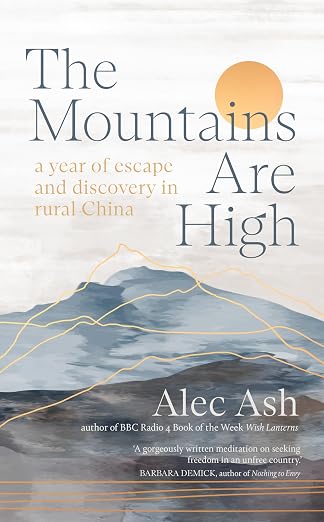
Read: The Mountains are High by Alec Ash

The high refers to those who are like him, coming from elsewhere in China for an extended break and are high from either drug or some other form of escapism. He took drugs too (weed at first, then acid). After tripping on acid he decided that he found his faith.

I don’t like the book for the suggestion that taking drugs as a short cut to finding faith – he suddenly found his faith after an acid trip. For that it is a thumbs down and after the book, I don’t like the guy enough to read another of his book. In the 1 year he spent in beautiful Dali, with all that nature and history and  all he could think of naming is a pun on drug taking?

Withdrawal Syndrom: Books on Yunnan

This format isn’t meant to compare these books – just listing what I’ve read in a more condensed way.

There is so much love that Peter Goullart has for Lijiang. I feel disappointed to discover I can’t buy his other writings – they are out of print. When I was in Yunnan, I love the touristy version of it. Yet, when we were there on holiday, there is this undercurrent of too good to be true. Peter Goullart does open with the touristy version of Yunnan in the 40s – enchanting, humourous, peaceful and mostly locked away. He also shared the real lived version of it. Opium, petty thievery, crazy aggressive tribes, and the Naxi community around him. He was sympathetic to the people in the area, generous and willing to humble himself to make friends in the community. He could not be a better official for Yunnan branch of the Chinese Industrial Cooperatives for one main reason – he was willing to hike up inaccessible places, learn so many languages and was honest and transparent. He is literally the kind of just, fair and open magistrate that C-Dramas portray. Even with the not so great experiences (from the minor annoyances to outright close to death) he has with the tribes, he remained open and magnanimous.

I was surprised to find out he wrote it in Singapore and found publishers in Singapore. That’s amazing. It’s so sad though I can’t find his books in print.

It was strange to me that this was sold so widely and won lots of accolades. I felt the author replaced research with fiction and that was about it.

I finished the book and felt it was totally alien as if a far away westerner writing about a tribe in China. The more believable aspects of the portions was when all the characters moved to America. All of a sudden, they felt at home. Not lost, trying to explain and understand a culture they didn’t belong. I had a hard time trying to figure it out what made this book strange for me. It was extremely well researched but something was not tight about the story.

Superstitions and cultural norms and taboos are the first ways that humans collectively reduce their risk of death, of man made or natural disasters as they go about their day to day life. Their village has a ruma (spirit priest) and a nima (shaman) – this indicates that their beliefs are extremey tight as a norm. Their norm is also intense pattern identification from dreams as an indicator of potential or emerging risks. Even if one person in that village is educated, that one person will live life very close to the cultural norms even though education explained those beliefs as superstition. 山高皇帝远 -being “very far away from the emperor”, being in the hills, change and the Cultural Revolution didn’t make a huge difference. Change was slow as is expected in this place where the teacher was exiled.

In this context, every tribe person would adhere closely to these norms. There will not be accidents such as San Pa hitting the spirit gate. In these cultures, baby care will be more extreme because not only you will need to care for the child physically but also protect it spiritually. Li Yan’s mom will not leave the baby alive because bad things will happen to her family and the child as well. As a culture and a midwife who has no qualms getting the man of the family to kill two newborns (rejects), to leave a reject newborn is to subject it to something worse than death. As a mom who had given birth to a fatherless child, regardless of her maternal instincts she would also follow those practices. It would be worse for her not to. The logical story would be the sheer imagined terror of unleashing a defenseless child against spirits who will attack it and cast bad omens and actually do bad things through the baby, like a poltergeist. (See this detail explanation by Ruijing Wang that I found – “Ritual Care: How the Akha Take Care of Their Small Kids?”)

It is also unexpected that an educated person will abandon their norms immediately after moving to a different country. My observation is that the norms are best preserved by migrants. They live as though frozen in time. They carry on their normal tasks while internally, they are still there with their grandparents and parents in the countryside or in their home country. Habits, norms in their home country has changed significantly but these are not transmitted to the migrants. So they freeze what they know and carry them out in their new home. So when moved to America, when the American white people’s prudish habits of stating that they don’t go out and just eat and have intercourse, it was jarring. Talking about a one bedroom bungalow and describing it as cozy and perfect for 2 persons is crazy. A 4 bedroom house (“Spanish styled”) is grand and extremely luxurious. Knowing that it is styled in Spanish ways and she has a room that sounds like a writer’s room, is off the charts nuts in terms of luxury. 不上头才怪!

So when she suddenly behaves in America as if familiar with the comfort, taking on strange habits of stating intercourse (almost like those Nanyang artist besotted with topless Bali ladies) it sounds correct. Like she is an American – never was Ahka at all. The odd device of doctors writing long letters to new parents of the baby, I could actually accept it. Very rich people do have doctors who are on call and has wonderful bedside manners. Not having one is usual means not wealthy enough. It is odd though to be so descriptive. Ha ha.

Rothschild scale of wealth

I am reading the House of Rothshchild since December – picking it up and putting it down. It’s a boring dull record of all the monies they make and the varied deals and negotiations they had.

Two things struck me. One, it appears impossible to have a well run anyway without some conflict in the running of it. While the father and brothers had this super tight agreement not to split up the business – instead they created their own branches and cross held  shares, there is still conflict in the day to day deal making.

Their willingness to take on risk for the deal. Risk like smuggling, running capital flows during wars. They did not hunker down and avoided risk. They aggressively continued business, taking on larger and larger risk until they were, combined, bigger than any other banking houses. They were never shut down because countries at war were begging for the shipment of gold to fund wars and they were the only merchant banking house willing to do so.

This appears to be the same sort of basis why certain illegal busineses such as drugs growing, manufacturing and  trafficking remain hard to kill off.  (I’ve read elsewhere). Generals with huge resources were able to fund and provide armies for wars in their country. As a thanks, they were undisturbed in their businesses.

Rothschild “assisted” many countries. In addition to having  insider news from politicians, they were largely undisturbed in their deals. They had cultivated many political relationships with bribes. 

Look at their growth

1797: 9,900 GBP 

1807 : 50,600 GBP (10 years)

1810: 72,700 GBP (3 years)

1815: 336,000 GBP (5 years)

1818: 1,772,00 GBP (3 years)

By 1825, they hit GBP4.08m and 1844 it was GBP7.78m.

It made me wonder if the Boglehead theory of 2 or 3 fund for the simple minded investor was really a marketing tool. It was easy to sell and it meant Vanguard could set these funds up easily, earning a small mark up for their troubles (the smallest all the proponents will tell you).  Now with this huge fund invested in the market, globally with big amounts, now wouldn’t that make a guy feel a bit swell? He could influence the companies without owning anything at all. He has an army at his bidding and calling ready for world domination. What would the next step be?
Bill Nighy’s Ill-advised

There was an interesting comment he made about book storage in response to a question of someone who was drowning in books.

Bill Nighy said that he doesn’t hang on to books unless there there is a special reason to do so. He said that when he was younger he imagined he would love in a book lined home when he grew up. That was not the case.

I also imagined that I would love to have a home or a living room that is like a library. Now older and having owned a home, I don’t actually think I would enjoy it. I tend to need to go toilet urgently when I smell books. I can not last longer than 15mins in a book store without having to make a run for the loo. And the reason is because I love reading and I always read on the toilet.

The other reason is that I discovered I enjoy not having eye clutter. My home is not constantly clutter free. If possible, I would love to get rid of my belongings so that I don’t have clutter at all. I don’t even like storage that is full of things. I want it to be empty. The idea of have shelves weigh down and groaning with books is romantic but ultimately as a person having to do the chores, it’s an idea best left as a fantasy.

History

Describe an item you were incredibly attached to as a youth. What became of it?

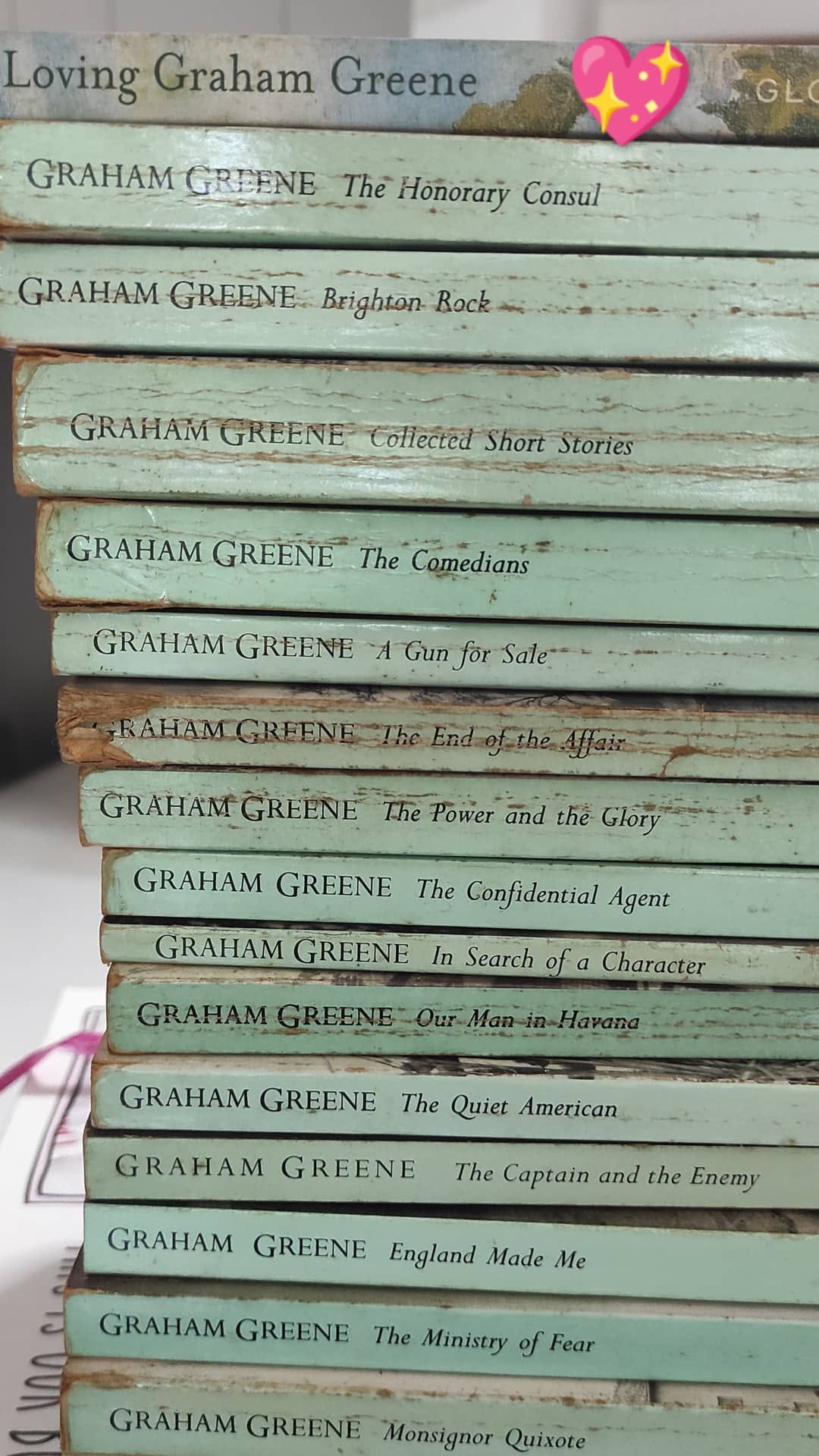
I never thought I would stop loving Grahame Greene, honestly. He was my first real love. I had an earlier “boyfriend” John Irving. Irving was a middle school romance. I was attracted to how funny he was. I was smitten by his jokes and how absurd he makes everything seem. I hung around Irving’s friends like Kurt Vonnegut and Gunter Grass and pretended to laugh at their jokes and filled their beers when they cried. I never really did clicked with the three of them. Vonnegut I could never get – his jokes were not funny. Grass was sooooooo super cool. Always bringing his pets or toys around – a dog, cat, fish, drum. I loved being part of the cool crowd. At the height of my coolness, Grass introduced me to Thomas Mann. I felt so fancy when I met Mann. He was suave, cool, handsome, funny but never overly cerebrel as if one of those Oxbridge people who have the mythical combination of bright, smart, kind and funny. It was disappointing I wasn’t invited back after a few times. I suppose I wasn’t cool enough.

I was totally obsessed with Graham Greene. I have forgotten how we met. There was no big moment. No meet cute. Just a book store and random really there are so many others, you know. Definitely nothing in romance novels or “that it was fate that drew us together”. I didn’t think it would be a lengthy love affair and such an obsession. I even flirted Dostoevsky when we drifted apart. (So worldly wise and so trustworthy. Over the years, Dostoevsky and I became good friends. I cannot always understand what he says when he rambles on but when I need some sorting out, Dostoevsky answers my telephone calls. ) I also remember another in between guy Thomas Hardy. (So many Thomases!) I stuck to Hardy for quite a long while. But throughout this time, it was only Greene who filled my soul. I was drawn to his melancholy, his inner drama. Greene drove to the hilt my intellect and emotions. There was no drama, no shouting, no declarations of love. Just a quiet intensity of emotions. When he dropped me, I was devastated.

Margaret Atwood rallied around. We drank tea and talked about men. Later, I must have been introduced to Peter Carey by someone. He was brilliant – too brilliant. I called Dostoevsky and this time, it was a voice message. Over time, peace and calmness returned. I no longer think about Greene at all. I wonder at myself why the intensity then.

Lately I’ve met a mentor Hilary Mantel. She is so experienced being in the corridors of power. She terrifies me actually. Once you get into the boardroom, she knows your P/L and Balance Sheet, not only your secrets but the secrets of others and she knows how to use them. She is at the same time empathetic yet cunning. 100% scary. I can never have long sessions with her. I don’t tell her about Greene when I talk to her. She has already known and dismissed him.

(I gave away a full collection of Greene’s books a few years ago.)