Clearing Old Emails

My reading habits, my writing style, my occasional gloom, my curiosity, my little pats on the back, my long (pointless) conversations about things that annoy me, my childishness, my curiosity and friendliness to strangers on the internet, my hoarding of chat history, random chats with old timer bloggers. Nothing has changed. The blog address did change however.

Husband of mine asked to read my blog – I didn’t know that he didn’t know that I’ve got one. I just have too much mental meanderings written down everywhere – notes, email diaries, paper diaries, learning journals, work diaries, mentoring diaries. What a huge mess to get rid off when I am off from this realm. Do I delete them all now? I did purge all diaries once and regret it occasionally, although I am unsure what it is that I regret.

Can’t reccomend this enough: Singapore National Gallery

The permanent exhibition “Siapa Nama Kamu” is super fun! Paintings cannot be experienced online. It’s the equivalent of watching food when you are hungry. The galleries was categorised by a timeline of art development in Singapore. (The intro said broadly – I think they meant – staid, super fun and experimental. )

It isn’t arranged in a typical western art way – romanticism, cubism, etc, etc. There was not a lot of those styles – I wonder if it was the artists were doing it for fun. They weren’t trying to be famous. The Super Fun period had a reference to a Nanyang period. I had sniggered, thinking this was thought up by a marketing department. It wasn’t.

The Nanyang style refers to the pioneer Chinese artists’ work which was rooted in both the Western schools of Paris (post-Impressionism and Cubism for example) as well as Chinese painting traditions; styles and techniques of both were distinctively integrated in depictions of local or Southeast Asian subject matter (Singapore Art Museum, 2002).

More notably, the Nanyang art style is the result of these artists having departed from their roots – but not entirely – to try to produce something uniquely regional. They aimed to represent pictorially the Nan Yang culture and way of life – Nan Yang meaning South Seas in Mandarin. As art historian Michael Sullivan pointed out above, these painters could be striving to produce an “expression of the times”.

Yeo, Alicia (April 2006). “Singapore Art, Nanyang Style” (PDF). biblioasia. Singapore: National Library Board. pp. 4–11

Can you please go to level 2 and see this awesome portrait? Portrait of Lee Boon Ngan. It is online but the online version is not awesome. It is strangely yellow. Look at the detail on the shirt! The green gray on the nose! Her skin is robust and not sensitive. These other two made me lol out of delight! Picking by Tay Kok Wee and Here they come by Koeh Sia Yong. It was superb! It was energetic! The anger! The unfairness! The entrepreneurial spirit! The resourcefulness! The need to be alert to threats and opportunities!

I was moved by a re-enactment of the artwork. I love the video for the interviews with the artists. They had clarity in the trade offs they have seen. They did art because that was what they did and they picked social realism to be relevant. Honest simple living. People sell food because that was what they did. Teachers taught because they could read and write. Bank officers were hired from comfortable families because they know other comfortable families. (Bank clerks were different from officer grade.)

Young people are now exhorted to pursue their passion. Consistency is a discarded virtue. Why are we coy about being paid for work? It’s honest simple living.

As I tidied a shelf of notebooks last week, it occured to me that I accumulate a lot of words that I don’t re-read. The notebooks exist to get the words out. I once read that a writer will always write. In all my wisdom of a 16 year old, I disbelieved it. Productivity will cease, I thought. (Clearly, I more suited for a life of a white collar bean counter than an artist.) I had wanted to be a poor artist. Not starving – I like my food. I now know, it is true that writers will write. Artist will paint. Those who love eating will feed themselves and others. Those who love sleeping will work themselves up for a nap. We will naturally arrange our lives that is comfortable to ourselves.

Writing books, is likely, not my thing. I count beans and write stories about corporate exertions. I develop reassuring memos of what has been done and what is to be done. I am creative when it comes to relaxing and untying knots at work. Work is rarely difficult, mostly comfortable and my temperament is well suited for it. I don’t think I am well suited to be fully creative. As a bean counter, there will always be a worry about my own quality and productivity.
On artistry

最近会一边上班一边听李宗盛的演唱会。有时候听到某些歌会不知不觉的流泪。这些都不是他年轻时写的情歌而是后来发的《给自己写的歌》和《新写的旧歌》。

I was watching an interview. A sweet young thing asked how could he have written hit after hit without experiencing depths of emotions. His reply was earnest. Song writing is like acting – it is cerebral. It is a calculated way to trigger an emotion in someone else. It could be a singer, it could be a listener. It’s a technique that can be learnt – there is no expression of emotion in a song writing. I enjoyed all his songs but the later ones, the ones with years of ability to con listeners all condensed into a few minutes, felt most powerful.

He reminded me of Graham Greene – his ability to reach the reader and his bottomless need for female companionship even when he was very old.

Noodles

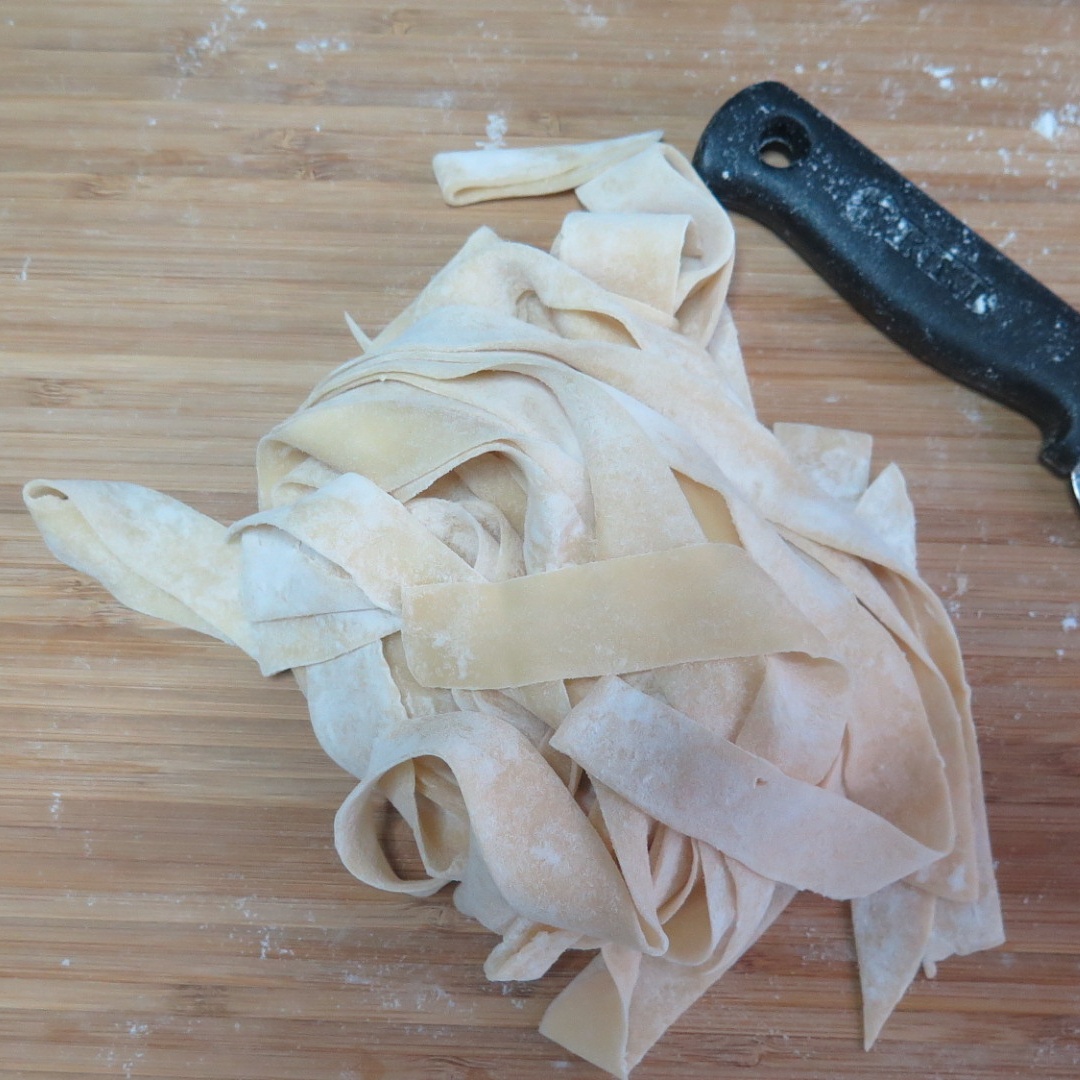
IMG_20160514_185854I can’t stop myself from just testing the taste of all the carby things I make. I ate one and a half bowls of these noodles (made with bread flour) last weekend. The next day, I had one portion left, I made them for Mr TCM’s lunch. I taste tested a small bowl. And two more long strands.

I’m making these for my 40th birthday with the Tipo OO flour. And a carrot cake with 40 candles all lighted up.

What is a hobby?

A hobby was not for enjoyment but a performance of perfection. I must be perfect before I can engage in something. I carried this belief with me from when I was a child.

It is utterly stupid and illogical. I did not know how I arrived at this conclusion. If someone had described this ludicrous notion and ascribed it to me, I would politely reply, “How interesting.” The conversation would turn to some other topics. I couldn’t see this was my practice. When I was little, I enjoyed writing during English composition classes. I gained a reputation for being good at it. I started feeling that I could not publish something until I was good. It was impossible for me to write a story. I couldn’t get it perfected. If I wrote a story, nobody ever read it. I only manage to get one story published. The main character was also a person who managed to be perfect without effort. I enjoyed drawing but when I discovered that my drawing teacher didn’t think I was good, I lost interest. I write discovered as if it was a fact but it was more like an inkling of a suspicion. Overnight, heated by the suspicion of imperfection, my interest evaporated. This strange notion extended to activities I didn’t enjoy – piano practice and school work. It’s one thing to know I have this illogical quirk. It’s quite another to persuade myself away from this usual thought process that I have to produce something perfect out of the time spent. Is a hobby to produce a perfect product or is it a journey of attaining perfection?

Hiromi Place to Be (Easy Version)

Practiced in a rental room yesterday after sorting out some important paperwork. I took a while to get use to the piano (Cristofori). I did not enjoy the instrument and I felt it was difficult to express the dynamics of the music. It also took a while to get better accuracy and a consistent speed. I changed some of my fingering in LH to improve accuracy. Took a break to listen to Hiromi playing it and to goof around with some children’s songs. Went back to practicing the two pages. By the end of the lesson, I felt I was more fluent in it.

Hiromi’s Place to be (easy version)

I practiced this intermittently over the weekend. Pleased with progress.
Day 1: played through slowly with hands together. Practiced the measures I got wrong (especially the parts with rhythms or fast notes). Tried to observe notations. Noticed spider hands on my last finger.
Day 2: Repeated the problem areas.  Reduced errors. Improved the rhythm areas. Tried to imbue more dynamics in the piece in parts. Felt that I achieved improvement in the rhythm and accuracy.

With my progress I went to try the Roland digital pianos at swee Lee again. This time I focused on Roland RP 401R with a bench and the LX 15,  comparing the way it feels when I play. What struck me was that my acoustic Kawai at home is in pretty bad shape. Keys stick, out of pitch and tune, the key mechanism feels off –  even stroking the piano softly I can’t avoid a loud brilliant sound. It feels a tad heavy but not in a way that I am reminded of it when I play. When I played on the RP 401R, I felt wow, my old piano sucks. The RP 401R is quite serviceable for a low to middling piano. I tried the LX 15 right after. The LX 15 seems to feel  extremely pliable and light at the standard touch. At the heavy touch setting the keys turn weird and bouncy. At the light setting, it felt too soft and I felt out of control. I enjoy the ability to express myself on the Roland. But I do wonder if Kawai Es7 is the better choice because of the heavier keys. I have a strong dislike of the sound and I felt the keys stodgy and stiffer than my lousy acoustic. I have never played on keys that heavy. I suppose the right choice for me is the Roland. I wonder why I revisit the choice so often. As if it was the piano that would make or break my interest.

Piano pieces (revised)

I’m using this goal described here

1. Expect a high level of achievement with each piece. Near enough is good enough, but near enough means at tempo and with flow and with communicative intent, not a bald reading-through without any sense of what the music means. So performances need dynamics, articulation, voicing and balance, used of pedal and so forth! If this seems too big an ask you need to be looking at easier material, not at lowering your standards.

2. Start with a slew of material. Let’s stick with our hypothetical Grade 5 student. Week One of 2013, assign two Grade 5 standard pieces (meeting your student’s expectations) but also give a couple of pieces from Grade 1 or Preliminary or even P Plate Piano 3 standard, along with another at Grade 2 or 3 standard. You’ll be assigning another two pieces the next week (probably both at the Grade 1 end of the spectrum), and you need things to be moving right from the start.

3. Explain directly and clearly what your expectations are regarding each piece, particularly in regard to time frames. For a piece of music 4 or more grades below their current exam-standard, tell students they have one week to learn the piece, two weeks if there’s some catastrophe like a house fire. Make it understood that these pieces are not supposed to take a whole term to master, that the whole point is learn these easier pieces as quickly as possible and move on.

I dropped Hiromi’s Sicilian Blue the rolling melody didn’t appeal to me.
Hiromi Sicilian Blue (easy-med)

Gymnopédies 1
Mozart Ah vous dirai-je, Maman Variation 2
Hiromi Place to be (easy-med)

Gymnopédies 2
Mozart Ah vous dirai-je, Maman Variation 3
Hiromi Somewhere (easy)

Gymnopédies 3
Mozart Ah vous dirai-je, Maman Variation 4
Hiromi Pachelbel’s Canon

Mozart Ah vous dirai-je, Maman Variation 5
In The Still Of the Night

Mozart Ah vous dirai-je, Maman Variation 6
Forest Gump Theme (med)

Mozart Ah vous dirai-je, Maman Variation 7
Mozart Ah vous dirai-je, Maman Variation 8
Mozart Ah vous dirai-je, Maman Variation 9
Mozart Ah vous dirai-je, Maman Variation 10
You’d Be so nice to come home to
Let’s Do It

Mozart Ah vous dirai-je, Maman Variation 11
Night and Day

Mozart Ah vous dirai-je, Maman Variation 12
I’ve got you under my skin

Additional material?
Keith Jarett – Shenandoh